Sunday, May 14, 2023

Stories from Inside Qatar


I´ve started to read this book many months ago, shortly before Qatar World Cup 2022. It looked like the right moment to start understading ´one of ther richest nations on Earth´ that was about to take over the news with a much awaited international soccer event, from an anthropological point of view. Somehow though, the intake of daily news introducing also the ugly part of the Kingdom to the Western media, despite the intensive PR and spin-doctoring, was partly covered. 

As in the case of many other countries in the region, benefiting of huge financial power, mostly due to the rich oil resources, the treatment of foreign workers, the citizenship restrictions and the treatment of women - to mention only few of the most dividing topics - Qatar is mostly closed to outside scrutiny. News about corruption involved in the successful bid of Qatar, the Arab first world country to host a World Cup, and restrictions to journalists and participants to the events jeopardized the expected media success of the event.

A historian and anthropologist based in Turkey, John McManus explored a couple of very sensitive aspects of the everyday life in Qatar. Inside Qatar. Hidden Stories from One of the Richest Nations on Earth is based on discussions with residents of the country, mostly belonging to disadvantaged categories, such as construction workers, immigrants from the region or South-East Asia. Further on, a whole new realm is settled, where segregation is enforced outside the central urban areas, labour rights are denied and migrant workers abused. On the other side of the separation line, the highly qualified working force from the ´developed world´ is enjoying priviledges and a lifestyle impossible to entertain back home.

John McManus observes and takes notes, investigates based on his own observations and using voices of people directly witnessing different situations. I appreciated the focus on labour rights and the shy yet emergent movement or individual examples of individuals trying to challenge and eventually change the current situation. On the other hand, I´ve felt like there are so many other aspects missing from the book, including the influence of Qatar in shaping certain policies in the region, through Al Jazeera, for instance, or various support for terrorist groups

Inside Qatar is an important reference of anthropological value that helps understanding the country based on the testimonies of less priviledged people contributing to the wellbeing of the country. Thus, there are many myths shattered, and many more waiting to be analysed with the same distinction and distance from the steams of paid advertising.

Rating: 4 stars

Monday, February 20, 2023

Spin Dictators


For the highly optimistic bunch who, like me, was thinking that Internet will make the world a better free and democratic place, Spin Dictators by Sergei Guriev&Daniel Treisman is a bitter wake-up call. In fact, what Internet and online/social media tools in particular provided was equal chances: to either do good or bad.

Search for the money and then you may know that people in power, keen to keep being in power at any price, will do their best to manipulate algorithms and get online visibility. Fake news and non-news upgraded to the level of news through SEO-related tricks may prevail compared to the classical information sharing. Spin Dictators can have it all, except one single thing: stand faced with informed readers, who may be as versed as them in the field of media/online knowledge. 

The tools may have been used before: television used to play with similar - although at a smaller scale - manipulations. The antidote is a generation of critical thinkers, able to distinguish bad from good, that in no way could believe everything they read. Able to recognize the manipulation of the digital dictators and their misgivings. Informed citizen, aware of their rights and how precious they are to fight for it.

This book is an useful and well -researched source of information that may definitely help understanding the mechanisms of political manipulation but instead of being deterred and skeptical about the chances of democratic survival, to rather realize how one and a society in its entirety can better fight to maintain our democratic rights and freedom.


Friday, February 17, 2023

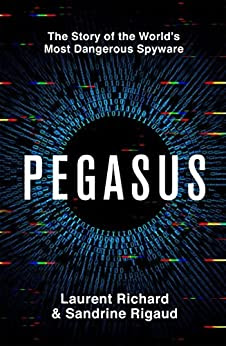
What to Learn from the Pegasus Story


Does science and innovative achievement take into account moral implications? Should we limit the success of our scientific and techonological projects for the sake of presumptive moral and political harm?

I don´t have the knowledge of critically assessing the label that Pegasus is ´world´s most dangerous spyware´, but as much as it was featured in the media, this system developed by the Israeli company NSO was definitely sold to state actors and institutions that used them contrary to human rights, media freedoms and democracy principles. 

In general, the overall discussion about Pegasus took inevitably a biased direction that does not have necessarily to do with the results of the investigation, targeting NSO beyond the purely sake of the investigation. However, after reading the investigation by Forbidden Stories investigative reporters Laurent Richard&Sandrine Rigaud I couldn´t stop from thinking in terms of responsibility and human risks - privacy, and well beyond that. 

Should companies, any of them, consider more the human element into their risk assessment considerations? We are living in an era when social responsibility is higher than ever before. Companies are taking responsibility and trying to behave in a responsible way when it comes to protecting the environment, for example. Why not trying to take a similar take on issues that may pertain to digital surveillance and human rights

As humans who are creating machines and apps and push forward for technological achievement, maybe we can try sometimes to temper our enthusiasm in order to leave place for human and moral consideration. From the academic point of view, this is a discussion that belongs to our current process of mentalities shaping in the making. For each times, it´s own priorities and until the transition will fully take place, conflicts between new and old mindsets will prevail.

Saturday, December 24, 2022

Side notes on a Revolution in the making

With the Iranian revolution heading to its 100 days of protests, there are clear signs that there is no turning back. The wave of contestation of the mullah-lead regime and the extreme violence of the counter-reaction of the different layers of the establishment leaves no place for ´dialogue´ or ´reform´, as some interested voices of pundits and journalist may be trying to make believe. 

That this will be the last winter under the cleric yoke it´s almost clear. December seems to be a bad months for dictators, and the former Romanian dictator whose last visit before being condemned to death for decades of crimes against his own people was Iran, experienced this on his own skin. What it largely unclear is what will be the next steps of this transformation? Will the perpetrators of the 43 years of dictatorship brought to justice? Would they be able to escape to sunnier lands? Would they eventually use the assets transferred through third outside the country and make a come-back as ´democratic´ participants to the inner competition for power within the incoming free regime?

Reading the notes of the Polish journalist Ryszard Kapuściński who chronicled the last months of the Shah and the instauration of the new clerics´ regime, one may notice a lot of similarities: a ruling elite, with the Shah on the top of it, living in complete denial about the real needs and aspirations of the people; the constant persecution and murder of intellectual elites; the active role of repression forces - like SAVAK - in maintaining the regime and violently discouraging of dissent; the widespread corruption and the large scale stealing of natural resources; the persistence of protests for month before the Shah - at last - and his family decided to leave the country.

There are also many more small differences that do distinguish one regime from the other, one being the desperate blindless of religious fanatics who may not spare anything to stay in power. There is no other danger for humanity than a religious fanatic in position of power. Hence, the refusal to leave the theatre with minimal decency. Also different is the deep hate those mullahs seem to have for the culture of the country they kept hostage.

Even when on the wrong side of history, Iran remains an important regional player and the changes taking place sooner or later within the country may send waves of change across the region. Time will show what kind of changes will be involved and especially who will be the agents of those changes. 

Wednesday, November 9, 2022

The Revolutionary Women of Iran


There is a lot to be said why more than one month after the protests asking an end of four decades of oppression in the Islamic Republic of Iran do still have such a low and relatively distorted reflection into the German media. But for those really looking to understand what are the roots of discontent and why women are on the forefront of the protests, Golineh Atai published exactly one year ago a book featuring nine women from Iran, most of them unknown outside the borders of Iran - the most famous of them is Masih Alinejad who may not be everyone´s cup of tea but nevertheless she started a movement encouraging women to speak out against the government.

Born in Iran, Golineh Atai moved to Germany as a child, shortly after the religious establishment started its take over of power, economy and society in Iran. 

The women movement in Iran has a longer history. Women like Sediqeh Dowlatabadi or Forough Farrokhzad opened the way to more acceptance towards women. Personalities like Nasrin Sotudeh or Shirin Ebadi and the many many unnamed women who refuses the hear to the rules made for them by greedy blood-thirsty clerics. 

What is really disturbing reading the testimonies gathered in Iran. Die Freiheit ist weiblich is the terrible mistreatments ongoing in Iran prisons and the even more horrible barganinig with the corpses of people murdered in prison or during the protests. It is simply.

The book by Golineh Atai is eyes opening and helps to map the mental realm of the current protests. More and more people outside Iran should read such testimonies because it shows how resolute the women of Iran are to challenge a regime way too courted by Western governments and companies. The ongoing Iranian Revolution will definitely change more than a regime in Iran, it will redefine a better and more peaceful Middle East while pushing forward the Western democracies to restrain their appetite for friendly diplomatic lakeys of dictators. 

Friday, September 30, 2022

Antiracist and Antibias Teaching in the School Community


Diverse learning is challenging not because there are not enough people qualified to do it, but due to the lack of proper resources and inspiration to continue antiracist and antibias teaching projects. Resources are important to save time and energy, by using patterns already proved successful. The inspiration of other educators following the same path is an encouragement in the hardest moment when there is no support for continuing among parents and other educators and even a clear opposition to an antiracist and antibias teaching.

Educator and social change activist Liz Kleinrock created a very useful collection of resources aimes to offer A Guide to Antibias and Antiracist Work in Your School Community. Those expecting to get a theoretical explanation of the pedagogical processes may be disappointed, because the book is mostly packed with example and testimonies of the regular experiences of the everyday teaching. Which is exactly what teaching is all about: teaching is rather a process than a corpus of theories and methodologies that should be followed blindly. It has to do with being able to adapt to a reality always on the move. 

This reality is adapting and complex and the role of the educator to create both the change and the premises of change. Therefore, the book collects different perspectives and suggests different angles to deal with white supremacy and antiracist education, from a standpoint that rather encourages empathy and understanding instead of accusing and a black-and-white worldview. An important pre-condition of such a process is the idea of unlearning according to which certain concepts and stereotypes acquire through mainstream education or family upbringing can adapt once faced with different arguments. This implies also including the representatives of the mainstream involved in the process of mentality change while avoiding the ´savior´ mentality.

The book is a great tool that may help teachers and educators to plan their lessons and understand different perspectives and points of views. It has a humble take, of someone who will never cease to learn and to adapt, because the aim is less to receive appreciation of the flawless planning but to dramatically push forward the limits of the narrowminded mentalities.

Rating: 4.5 stars

Tuesday, September 20, 2022

The Condition of Conditional Citizens


This quote from Conditional Citizens by Laila Lalami aimed at describing her experience as a Moroccan-born American citizen applies though to any other non-local conditions (including and particularly in Germany), both from the point of view of their contribution to the overall society than to the limitations and resent they experience on a daily basis:

´Immigrants continue to contribute to America in a million different ways, from growing the food on its tables to innovating the technologies its citizens use every day. Some are exceptional in their fields, while others work in the fields, doing jobs that few nations are willing to take because of their low wages. Whether documented or undocumented, immigrants commit far fewer crimes than native-born citizens. But whenever on offense, particularly a violent offense, involves immigrants, the entire project of immigration is called into question. The problem is, the nativists may say, they don´t assimilate´.

One can write novels and memoirs about how does it feel to carry the weight of your passport on your shoulder, every second of your immigrant life. No matter how educated and fluent you may be in the language, most often than not your identity and allegiance will be questioned, either by your colleagues or the neighbour next door, curious why strange sounds are heard from the other side of your door.

I may allow myself to describe this eternal condition as a Non-belonging.