Friday, August 11, 2023

An XRay overview of Putin´s People


Especially after Putin´s war against Ukraine - unfortunately too late, for reasons that will be later explained - there are more and more journalistic investigations and reports about Putin´s wealth, influence and his extended network of trustworthy pawns spread all over the world. Russian studies are back in fashion and the voices of Russian-speaking experts are once again heard. Too late, as Putin´s work in undermining democracy started many years ago, from the years of his career as KGB operative in Dresden.

British journalist Catherine Belton, former FT Moscow correspondent between 2007 and 2013, exposed with an acribic precision ´how the KGB took back Russia and then took on the West´. Her book, Putin´s People offers all the background one needs to know about how Russia operates now, and how his main puppeteer manipulates everythin, following the old rules of KGB. Through the network of politicians and business associates in the West - Germany may know a bit more about it, from the times of the Red Army Faction at least, encouraged and trained with the KGB support - and a trustworth super rich new class, Putin maintained his power and priviledges, becoming a power gold digger with expensive villas and yachts, he couldn´t have dream about in his humble childhood.

Aimed both at the large readership, but also political scientists and journalists relatively new in the field, lacking the steady background of the changes Russia went through in the last decade, in terms of elites´ change and Putin´s role in anti-democratic turns in Europe and abroad. A warning sign, well documented about how important is to not forget history and especially not underestimate someone like Putin. 

Rating: 5 stars

Thursday, July 13, 2023

Unterstanding QAnon Mindset


Following the failed attempted coup at the Capitol lead mostly by Trump supporters, QAnon conspiracy theories received worldwide attention in media reports and analysis. However, they were out a bit longer and they continued to be long after. During the pandemic, supporters of this organisation that melts antisemitic tropes with racist and conspiracy theories, took over the streets in Germany and other countries, to protest against the ´deep state´, a code for the official authorities. Practically, they grew exponentially during those times.

Mia Bloom and Sophia Moskalenko, two academic experts in the field of radicalization and far right theories summed up the history and background of the movement, as well as its main concepts and interpretations. 

We may consider QAnon a political cult, without necessarily designated leaders, but nevertheless exploiting isolated individuals. ´Conspiracties like QAnon exploit vulnerable people during times of personal crisis, especially those who lack social support networks´. For an isolated person without contact with real life and sometimes without a lucrative aim, staying at home and following various theories, and ending up by making up their own based on uncritical assumptions may turn into an addictive habit. The repertoire of the American conspiracies is much older than QAnon but in this case, it relies on the access to online resources of all kinds, and was supported during Donald Trump time in the office. Compared to other far right movements though, QAnon has a significant amount of women among its supporters due to its focus on ´pedophiles´ and sexual predators, but also due to their relative isolations, especially in some remote parts of America. 

Although Pastels and Pedophiles is well documented and is written in an academic tone, it feels as rushed out gathering facts and summing up only once in a while with some conclusions that do resonate, but sometimes are too general. I would have expect more theoretical background and throughout mentality analsysis in order to help us better understand the roots and the possible evolutions. 

The recommendation to include critical thinking as part of the school curriculum is a very good idea but would have expect more details about the content and eventually the methods.

The FAQ at the end of the book is an useful summary of the most important questions regarding this movement, but maybe would have been better to use this space for more details and considerations about the movement.

The book was published two years ago, when QAnon was frequently in the media and therefore, it aims at offering to journalists and curious people some important timelines and concepts. For someone knowing nothing about this topic, it is a good start although this book could have been much much more.

Rating: 3 stars

Disclaimer: Book offered by the publisher in exchange for an honest review

Tuesday, June 20, 2023

The Far Right Threat


A long-time expert in counter-terrorism and global Islamic threats like ISIS, Iraqi-born US-based Israeli Rita Katz rightly evaluates how loose is the legal and intelligence counter-reaction to internal far right threats. Written shortly after the pandemic lockdown, where all over the world, conspiracy theories were melted into nationalist rhetorics not amended by state actors, Saints and Soldiers. Inside Internet-Age Terrorism, from Syria to the Capitol Siege is an eye opening account of why and how the far right threats increased in the last years, unamended by state actors.

Someone who studied the ISIS and Islamist rhetorics for a long time, may figure out the common pattern by the far right, especially the anti-establishment and misogynistic take, anti-Semitism and the desire the disturb the everyday activities of state institutions. However, although the online activities of ISIS and its near of kin are relatively well documented and publicly denounced, worries are about the ways in which the far right is taking over the public discourse and its freedom to use and abuse online networks and open online resources.

The rhetorics are similar and they may need each other. When they are not just teenagers operating far right networks from the comfort of their computer in far away countries, individuals involved in far right activities of all kinds may know the state and may actually benefit of the support of state actors and individuals part of the system. See, for instance, the colourful list of people who were part of the plan to overthrwo the German government recently. 

This book, written with the feedback of someone who dedicated her life to dismantle the anti-democratic threats, no matter where they are coming from, is a very useful material aiming at explaining the current mindsets as well as the sources of discontent. State institutions, scholars and practitioners, be aware!

Rating: 5 stars

Thursday, June 1, 2023

A Story of Two National Narratives


In everyday diplomatic practice, national narratives are sometimes the hardest part to overcome. Rooted in mentalities and national representations, those stories do represent sometimes the chore of the identity itself. Once removed or readjusted, particularly if suddenly, may create dramatic identity rifts.

Republics of Myth. National Narratives and the US-Iran Conflict is a co-authored volume of analysis by Hussein Banai, Malcolm Byrne and John Tirman displaying and explaining the complex interactions - mostly behind the public eyes - between the two nations at war. A war of words, a war of decisions, a war of the narratives.

The authors are very informed, using local knowledge and national intelligence archives, which makes the information provided valuable and reliable. However, like in the case of the national narratives skillfully analyses, it´s always a matter of perspective and no matter how much information you may have on a topic, the choice of the topic itself is subjective. Definitely, Iran and US do have conflicting narratives, sometimes fuelled by other interests than the ones aiming at improving their own nations. On the other hand, neglecting the horrible human rights record and abusive character of the Iranian regime against their own people, which makes far more victims than the sanctions, may look dubious given the tremendous available information the authors had at their disposal.

There are aspects regarding international terrorism the regime in Tehran supports in the region, but without a throughout analyses that may reveal in fact why allowing them to own a nuclear bomb may be controversial. Minimising international critics agains the Nuclear Deal as being issued by the ´pro Israel lobby´ - I´ve lost count how many times this expression it was mentioned in the book - is distoring the value of the information provided and analyses.

Another rather controversial take is using geopolitical paradigms of ´border expansion´ which do have a highly controversial reputation, being used in various expansionists ideologies. Comparing the expansion of the US interests towards the Middle East with the previous expansion to the (wild) West, a a race for resources, largely uncritically, needed more than a paradigmatic translation in a completely different and much more complex context.

Republics of Myth is an important book for anyone interested in conflictual national narratives and their part in fuelling international conflict, but should be rather took with the very critical take, which is exactly how academics and intellectuals in general should consider any given facts, particularly of recent historical relevance.

Rating: 3 stars


Sunday, May 14, 2023

Stories from Inside Qatar


I´ve started to read this book many months ago, shortly before Qatar World Cup 2022. It looked like the right moment to start understading ´one of ther richest nations on Earth´ that was about to take over the news with a much awaited international soccer event, from an anthropological point of view. Somehow though, the intake of daily news introducing also the ugly part of the Kingdom to the Western media, despite the intensive PR and spin-doctoring, was partly covered. 

As in the case of many other countries in the region, benefiting of huge financial power, mostly due to the rich oil resources, the treatment of foreign workers, the citizenship restrictions and the treatment of women - to mention only few of the most dividing topics - Qatar is mostly closed to outside scrutiny. News about corruption involved in the successful bid of Qatar, the Arab first world country to host a World Cup, and restrictions to journalists and participants to the events jeopardized the expected media success of the event.

A historian and anthropologist based in Turkey, John McManus explored a couple of very sensitive aspects of the everyday life in Qatar. Inside Qatar. Hidden Stories from One of the Richest Nations on Earth is based on discussions with residents of the country, mostly belonging to disadvantaged categories, such as construction workers, immigrants from the region or South-East Asia. Further on, a whole new realm is settled, where segregation is enforced outside the central urban areas, labour rights are denied and migrant workers abused. On the other side of the separation line, the highly qualified working force from the ´developed world´ is enjoying priviledges and a lifestyle impossible to entertain back home.

John McManus observes and takes notes, investigates based on his own observations and using voices of people directly witnessing different situations. I appreciated the focus on labour rights and the shy yet emergent movement or individual examples of individuals trying to challenge and eventually change the current situation. On the other hand, I´ve felt like there are so many other aspects missing from the book, including the influence of Qatar in shaping certain policies in the region, through Al Jazeera, for instance, or various support for terrorist groups. 

Inside Qatar is an important reference of anthropological value that helps understanding the country based on the testimonies of less priviledged people contributing to the wellbeing of the country. Thus, there are many myths shattered, and many more waiting to be analysed with the same distinction and distance from the steams of paid advertising.

Rating: 4 stars

Monday, February 20, 2023

Spin Dictators


For the highly optimistic bunch who, like me, was thinking that Internet will make the world a better free and democratic place, Spin Dictators by Sergei Guriev&Daniel Treisman is a bitter wake-up call. In fact, what Internet and online/social media tools in particular provided was equal chances: to either do good or bad.

Search for the money and then you may know that people in power, keen to keep being in power at any price, will do their best to manipulate algorithms and get online visibility. Fake news and non-news upgraded to the level of news through SEO-related tricks may prevail compared to the classical information sharing. Spin Dictators can have it all, except one single thing: stand faced with informed readers, who may be as versed as them in the field of media/online knowledge. 

The tools may have been used before: television used to play with similar - although at a smaller scale - manipulations. The antidote is a generation of critical thinkers, able to distinguish bad from good, that in no way could believe everything they read. Able to recognize the manipulation of the digital dictators and their misgivings. Informed citizen, aware of their rights and how precious they are to fight for it.

This book is an useful and well -researched source of information that may definitely help understanding the mechanisms of political manipulation but instead of being deterred and skeptical about the chances of democratic survival, to rather realize how one and a society in its entirety can better fight to maintain our democratic rights and freedom.


Friday, February 17, 2023

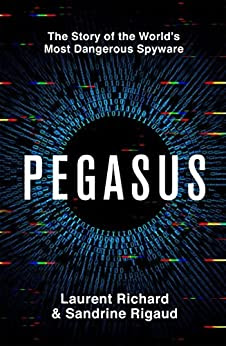
What to Learn from the Pegasus Story


Does science and innovative achievement take into account moral implications? Should we limit the success of our scientific and techonological projects for the sake of presumptive moral and political harm?

I don´t have the knowledge of critically assessing the label that Pegasus is ´world´s most dangerous spyware´, but as much as it was featured in the media, this system developed by the Israeli company NSO was definitely sold to state actors and institutions that used them contrary to human rights, media freedoms and democracy principles. 

In general, the overall discussion about Pegasus took inevitably a biased direction that does not have necessarily to do with the results of the investigation, targeting NSO beyond the purely sake of the investigation. However, after reading the investigation by Forbidden Stories investigative reporters Laurent Richard&Sandrine Rigaud I couldn´t stop from thinking in terms of responsibility and human risks - privacy, and well beyond that. 

Should companies, any of them, consider more the human element into their risk assessment considerations? We are living in an era when social responsibility is higher than ever before. Companies are taking responsibility and trying to behave in a responsible way when it comes to protecting the environment, for example. Why not trying to take a similar take on issues that may pertain to digital surveillance and human rights? 

As humans who are creating machines and apps and push forward for technological achievement, maybe we can try sometimes to temper our enthusiasm in order to leave place for human and moral consideration. From the academic point of view, this is a discussion that belongs to our current process of mentalities shaping in the making. For each times, it´s own priorities and until the transition will fully take place, conflicts between new and old mindsets will prevail.