Sunday, May 15, 2022

´In the Skin of a Jihadist´


By using a fake Facebook account, journalist Anna Erelle (for security and safety reasons, a pseudonym) tried the traps of the digital Jihadist propaganda. In the Skin of a Jihadist is her encounter as a pretender Islam convert based in France, a girl called Melodie, as she was flirting online with Bilel, the right hand of Abu Bakr al-Baghdadi, the Daesh leader.

The initial aim was trying to understand the roots of digital Jihad, how young, often Western, girls and boys from the West are falling into the traps of the propaganda. How they cannot be horrified by the violent videos shared generously all over the social media channels? The distorted religious interpretations they are fed with do appeal a certain need of respect and balance for a loneliness and lack of belonging. 

´Melodie´ was easily caught into the net of macho pride and religious self-rightneousness. The fighter, who happen to have at least another wife, was at ease sharing information about the latest fights, as well as about the smuggling networks operating at the border between Turkey and Syria. 

What in my opinion, although the book has interesting testimonies about the psychology of the people involved in designing the Islamic state, it lacks details regarding the operations of the Jihad 2.0. Although it is hilarious to be shared details about how such a high profile Daesh fighter was longing for the fine lingerie distributed in the corrupt West, and the naive hurry of getting married online with a woman he hardly knew - despite the complex counter-spionage like teams Daesh used to have - I had the feeling that the author went way too much involved in the so-called romance. She haven´t fell in love, Gd forbid, but there is way too much space dedicated to the story instead of exploring a bit more the modus operandi, the agents and tools.

From the journalistic point of view, the book may also raise questions regarding the use of such methods in order to obtain information. We may be happy to read about such relevant details, but is this the real way to get it? Was it not possible to obtain them any other way?

In the Skin of a Jihadist by Anna Erelle - against whom there is a fatwa decision issued online - despite its shortcomings, is an important source of information about the mix between extreme movements and sophisticated online strategies, compromised by the very human feelings, such as longing for love, belonging and maybe some fine capitalist lingerie.

Friday, May 13, 2022

Book Review: Nazi Billionaires by David de Jong


German wealthy elites are discrete, rarely featured in the pages of the glossy local magazines for their outrageous parties and lavish lifestyle. One knows practically nothing about their girlfriends and boyfriends and love affairs. May it be the famous ´protestant ethic´ requiring a humble spirit, a lot of work and humility while trying to pay in this life for the original sin(s)? 

Such a naive view on German elites is shattered into little pieces by the excellent unique research by investigative journalist David de Jong: Nazi billionaires. The Dark History of Germany´s Wealthiest Dynasties. Those billionaires may be actually too ´brown´ to accept being too long under the limelights. 

A couple of ´Made in Germany´ brands, if not the most important, do have in fact, deep and trustworthy connections with the Nazi regime. By the way of family connections - De Quandt family, for instance, Porsche, Dr. Oetker - those rich and very private families hid for decades the truth about their past. A past that not only concerned them as individuals involved in the reproduction and operation of the Nazi regime - through production of weapons and direct financial support - but also by directly using forced labour and taking advantage of the ´Aryanization´ policies - looting properties from Jewish businesses. 

De Jong, who spent four years in Berlin documenting the book, authored the first extensive investigation in the English language. German media who may benefit of some support from one or more from those companies - including through media prizes awarded through foundations bearing the name of documented Nazis - rather prefers to put on hold any questions related to the ´brown heritage´. They knew it already and, as I´ve often heard on topics related to acknowledging the past, ´we rather move on´. 

German industrialists and the German industry as such, became prosperous, among others, following the Korean War and the further involvement in production of landmines used in the conflicts in Africa, among others. Thus, when I watch those days the pathetic discourses defending the German non-involvement in the war in Ukraine I can only feel nauseated by the falsity of this all.

Those ´charming industrialists´ and their second wives and many children, who were eventually cleaned from their crimes for reasons pertaining to the Cold War interests rarely assumed their past or even tried to fashion themselves as victims or resistants. And those deluding themselves into believing that the past should not become the obsession of the present, may want to hear that not few of those companies happen to offer substantial support to far right, neo-Nazi parties and causes.

Beyond the decryption of the current German economic elites, the book also raises serious questions about the possibilities of a transition from dictatorship to democracy depending upon the former elites. Can it be otherwise? Is there any chance of starting anew, without necessarily using the connections and influence of the compromised elites? Probably not at a great scale, but assuming the past can make a difference. Also, having criteria when it comes to accepting back into the ranks of the elites compromised individuals, especially those who in a way or another supported crimes and political corruption.

Nazi Billionaires is a revelation and important contribution to the study of contemporary elites, particularly in post-totalitarian context with a specific focus on Nazi Germany. 

Tuesday, May 3, 2022

Dr. Kylie Moore-Gilbert: The Uncaged Sky My 804 days in an Iranian Prison


For two years and 3 months, Australian academic Dr. Kylie Moore-Gilbert was held prisoner in Evin and Gharchak, after being arrested by Iran´s Revolutionary Guards. Convincted by a Kangaroo court for being a spy of the ´Zionist regime´ she was freed through a prisoner swap, in exchange for Guards´ people imprisoned in Thailand for plotting against Israeli interests.

Uncaged Sky, her account of 804 days spent in an Iranian prison is her story of what she went through those years, but also encounters with more or less famous political prisoners in Iran, such as Nasrin Sotoudeh - whom she taught English -, the French-Iranian academic Fariba Adelkhah, or the so-called group of the ´environmentalists´: young people aiming to save the badly affected Iranian fauna and flora, sent to prison and accused of being spies. She spotted Ruhollah Zam, the French-based journalist owner of a popular Telegram group, member of a religious family who was lured and kidnapped in Iraq and further executed.

Dr. Kylie Moore-Gilbert was initially condemned to ten years of prison. Her memoir is first and foremost a testimony of carceral literature. Although the veridicity of a memoir based purely on memories who were not written down with pen and paper may be highly problematic, the coping mechanisms with the limitations of life in prison as well as the interactions with her abusers. How one can survive in isolation, in a foreign country, with a limited language knowledge? She improved her Persian, a language that will remain, for the time being a language associated with her time in prison, used to convene her experience about those months. 

There is also another line of thought which results from the memoir: the unhappy meeting between academic research and political oppression. Academics may be suspected and doubted, some of them may play an extra-academic card, some of them may be just naive thinking that the police of mind will accept their arguments of pure academic research. Nothing is free of politics in such countries and academics may be careful to avoid getting involved in such skirmishes because their academic freedom is more important sometimes than the academic curiosity. Moore-Gilbert was lured without results more than once into becoming a spy for the Revolutionary Guards, with guaranteed participation to academic conferences, among others. She repeatedly refused.

On the other hand, I strongly believe that academics, especially those with an invested interest in contemporary politics, need to be aware of the risks involved by their research. Taking freedom abiding risks does not serve the accuracy of the research and puts the academic at risks that may pay off with the freedom of their academic critical thinking as well. 


Saturday, January 22, 2022

The Wikipedia Story


Pavel Richter, the first CEO of Wikimedia Germany, systematically explans how Wikipedia works and what are its aims. It is a whole episode of human knowledge that was written with the creation of this online collaborative project. As in the case of other Encyclopedic endeavours, Wikipedia aims to offer a big slice of sharing knowledge to a larger amount of people. This happened before since the 18th century, but right now, it took over control of the information and Internet allowed it happened. 

In the old times, those who were written the various articles were well known and their credentials were well known among the elites sharing knowledge, Nowadays, the writers are mostly anonymous, they may have or may have not an academic degree and some of their private experience and opinions can be easily shared. There are students, and even authors, using Wikipedia sources as academic references but I know at least one teacher from a prestigious American university that abhorrs such a practice.

The knowledge disorder created by Wikipedia - useful still unreliable, extended knowledge as the result of global collaboration yet contested sources and information - is characteristic for the times we are living. Using Wikipedia as a source of information can be detrimental to knowledge, but learning how to use critically the sources shared online is part of the healthy use of the Internet in general. 

The Wikipedia story as shared by Richter is relatively general when it has to do with the story of the project in general - this is what Wikipedia is all about, anyway - but by far the most important part has to do with the particularities of the project in different languages - German, Chinese etc. It show how local legal and knowledge practices are reflected into the specific approach on certain topics - such as privacy issues etc. Wikipedia may feature the world global cultural knowledge, and it does, but in a way that brings in various differences and limitations.

Although I was maybe expected the book to be more informative, particularly in respect to various operational aspects of Wikipedia and its general structure, but nevertheless it has some relevant insights that are interesting to anyone looking to understand the current history of knowledge. 

Tuesday, January 18, 2022

´Le Naufrage des Civilisations´


Amin Maalouf is one of the most known - in translation - critical and lucid intellectuals from the Middle East. His lucidity, I think, is the result of his direct knowledge of historical facts of the contemporary Middle East. He was there, he saw it, he took part to the events. He is not observing from outside, watching the news from his couch. He is first there, living and breathing, and only after that he is sharing his views.

Le Naufrage des Civilisations is a collection of different essays about different historical life encounters, rooted in the Middle East. The events - the Six-Day War in 1967, the Iranian Revolution, the Cold War in South East Asia, the social and political changes underwent by Egypt, the war(s) in Lebanon - are placed into a larger historical and intellectual frame that may paint in the end a more disappointing and depressing landscape. The Middle East is suffering of a loser syndrome, at least some parts of it, particularly Lebanon. Maybe Iraq too. But there are part of it which are not included in the account and which are actually changing and do contradict the pessimistic narrative. There is modernity, at least in some part of it, and there are successful stories - partially, Jordan is an example as well. 

Although not a communist by principle, his perspectivea and information on the situation of the Communist movements in the Middle East during the Cold War are very useful for understanding at least part of this generational failure. The raise of the Talibans in Afghanistan and the hunting of Indonesian communists in the 1960s, a country with the thirds largest Communist Party in the world after the Soviet Union and China offers an extension of the outcome well outside the Middle Eastern realm. Thinking in terms of ´what if´ is a toxic intellectual habit, but nevertheless, without the turmoils created by the decades-long confronation between US and USSR, life would have been a better place. Maalouf does not dedicate at least the same amount of space to analyse the equally toxic influence of the Soviet Union in the Middle East and there is much more left to be said about the shortcomings of the local leadership, independently of the ´colonizer´ framework. However, it recognizes that both communism and anti-communist were equally a ´calamity´.

As I´ve read the book in the original French language, I can only add to the positive features of the book the beauty of the written words while maintaining the brevity and informative character. 

Le Naufrage des Civilisations is an important book for anyone looking for intellectual sources and resources about the Middle East. Although much more resources are needed about this topic in order to offer to the non-Arabic speaking reader a very comprehensive mindset about the historical and cultural complexities, it does offer a good ground for further building the necessary knowledge.


Thursday, January 13, 2022

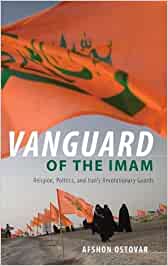
Vanguards of the Imam: Religion, Politics and Iran´s Revolutionary Guards


There is an important element of novelty in the Vanguard of the Imam by Afshon Ostovar, mainly an English-speaking account of the powerful - both economically and politically - Iran´s Revolutionary Guards (IRGC). 

In the author´s words, IRGC is ´a multifaceted organisation with reach into many different areas. It is a security service, an intelligence organisation, a social and cultural force, and a complex industrial and economic conglomerate. It is foremost a military organization´. 

The main question the book wants to answer is: ´What is the IRGC and what makes it such a domineering force in Iran and such an influential player in the Middle East? ´ 

The author uses historical details and contemporary aspects, trying to build a relatively clear landscape where the IRGC operates both internally and externally, particularly its journey towards becoming the strongest political actor in Iran, with its own naval and air forces, among others. All wrapped into a very unique religious interpretation which makes it an interesting - for the political science scholar, but deadly poisonous for those actually depending on it - case study for the mixture between politics and strict religious perspective.

The religious activism extends beyond the country´s border, influencing and creating conflict all around the region, but particularly in relation with Israel. 

Although it goes deep into the ideological and religious roots of this unique organisation, it does not explores further the movement in itself. For instance, a question that at least for me remains unanswered is what is the sociological basis of IRGC, what are the biographies of the members of this hybrid elite? Another important element which is missing, in my opinion, is the evaluation of the extent of the economic outreach which eventually may be an element to keep in mind in the case of a regime change. As it happened in many former communist countries, the control of economic resources by the representatives of the regime continued for a very long time after the political end of the regimes, which created, as in the case of the former Soviet Union, the well known phenomenon of ´moguls´. 

Clearly, the access to the information regarding both the structure of the assets and of the elites is very limited, and those aspects can be further explored. Those shortcoming do not affect the novelty and the rich documentary material used in this book. New angles and approaches will definitely help further research and analysis on topics that are very important for the study of the region as well as of Iran in general.

Sunday, December 26, 2021

Talking Tongues


Canada is frequently branded as a multicultural country, but what exactly this multiculturalism means and how does it apply in practice, we rarely read or talk about. At least outside the Canadian realm. 

The Art of Leaving by Ayelet Tsabari was one of my favorite memoirs I´ve read in 2019 and therefore,  I refused to wait any longer for getting my hands on Tongues. On Longing and Belonging Through Language, co-edited with Eufemia Fantetti. The book. which was published in the second half of 2021, is a collection of 23 literary voices based in Canada sharing their experience with their mother tongue, as well as with languages - loaned, owned, forgotten etc.

Although the essays are not necessarily equal, there are interesting aspects pertaining to languages which are important for understanding the existential value of words, mother tongues and languages. As there are over 260 million people not living in their country of birth, the ways in which one can operate - or fail to - in a second language, need a throughout and detailed investigation. The personal accounts are very important for understanding the multiple impact of languages on everyday life and even mental health and health in general.

As Kamal al Solaylee testifies, he had to give up Arabic because this language was lacking ´the vocabulary and textual resources to help me accept who I am´. A new language was the safe place for building up an authentic life. As Logan Broeckaert observed, gender is ingrained into the language therefore, not innocent. For Karen McBride, returning to her original native culture and language was a return to herself: ´It has taken a long time to find the confidence to live in the body and the skin I´ve been given´. Those learning their mother tongue - as in the tongue spoken by their mother and ancestors - may have a different mental and life experience, as shared by author Jenny Heijun Wills whose newly learned Korean language was part of the connection she started to build with her family of birth, she was separated from through adoption. Another - yet different - Korean linguistic experience is shared by the translator Janet Hong. For Rebecca Fisseha, her experience as a writer brought her closer to her Ethiopian heritage and language.

Languages are experienced differently and are supposed to be loved differently. Melissa Bull explained how not only her voice and demenour change when switching from English to French. As a political refugee from El Salvador, Leonarda Carranza ended up figuring up that in fact, what she used to called ´mother tongue´, the Spanish language, was in fact a tool of domination that deterred her from her natural connection with her native culture. In same cases, as Teochew-Chinese-Persian author Sahar Golshan explained the efforts of recovering lost languages can turn into a ´lifelong obsession with the accumulation of missing vocabulary´. Therefore, there is a certain loss of self that comes with the loss of a language, as argues Téa Mutonji. 

We need language, and words, as much as we need air and water. In Kai Cheng Thom´s words - in the beautifully titled essay Language is the Fluid of Our Collective Bodies - ´I believe that language is the fluid within the collective body: like plasma, like blood, like spinal fluid, it carries nutrients and information from one unit to another´. Thus, the painful process of returning to languages stolen through various political processes, as explained by Rowan McCandless: ´I mourn the many languages that were taken from me, the possibility of not being viewed as an outsider or defined by the colour of my skin´. 

But language means more than simple grammar and vocabulary. Indeed, as Amanda le Duc explained our way to refer to people with various disabilities is a language in itself which labels and discriminates. ´We say that we don´t actually think that people who are less intelligent are worthless, but our language reinforces these ideas´. Tongues can also be without words, as it is the case of the sign language, whose linguistic power is explained in the contribution by Adam Pottle. Being a writer with a learning disability, as shared by Jagtar Karn Atwal, makes the writing and the language experience even more painful from the existential point of view: ´Reading makes me feel as if I´m drowning in a sea of moving words´.

Languages are love, and by learning one, it is not only possible to gain a new life, but they bring one close to the source of life, love. Sigal Samuel asks, thinking about her father: ´does my dad learn foreign languages to gain access to women he loves, or is falling in love an excuse for him to learn another language? Either way, I looked at it, the answer was yes´. ´They say the language you speak shapes your thoughts, and so it does´, outlines Ashley Hind.

Ayelet Tsabari experiences languages in very different ways. Obliterated for various nation-building reasons, the Arabic of her Yemen family resurges when she, like many other second or third generation of Israeli with roots in Muslim lands, assume this part of their identity. ´A language, I want to believe lies dormant in my body, genetically encoded into my cells, waiting to be awakened, activated´. As a writer, she is represented by English, and switching between Hebrew and English, may be worrisome: ´Writing in a second language (...) is like wearing someone else´s skin, an act akin to religious conversion´. ´Whenever my Hebrew flows, I worry my English is at risk´ - this is a thought many of us, writing in a second or third or fourth language are very worried about because coming back to the source of words can be so difficult, while leaving it, the easiest thing on Earth. 

The pandemic is a guest star of many contributions to the collection, as the months-long lockdown and the isolation, may have tempted some of the authors to return to their original, lost languages or just learn a new linguistic skill. Sometimes it worked, sometimes not. 

The personal experiences doubled by the everyday writing challenges makes Talking Tongues an important collection for both writers and language lovers. In addition to revealing more or less problematic aspects of linguistic policies in Canada, it also contributes to the ever growing bibliography on languages and multilinguism in general.